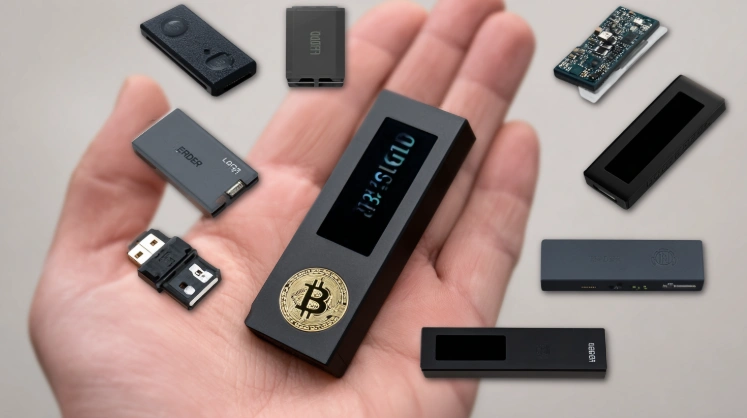
Ledger Hardware Wallet Comparison: Nano X vs Nano S Plus Differences
Ledger Hardware Wallet Comparison between flagship and entry-level models helps buyers select devices matching their specific cryptocurrency management requirements. The Nano X vs Nano S Plus decision involves evaluating connectivity preferences, budget constraints, and mobile usage needs. Understanding Ledger model features differences enables informed selection without overspending or underestimating requirements.
Both devices share identical security architecture through certified secure element chips protecting private keys equally regardless of price difference. The distinction lies primarily in connectivity options and form factor rather than cold storage security level. This comparison clarifies which features justify premium pricing for specific user profiles.
This guide covers design, connectivity, security, pricing, and recommendations for complete crypto security comparison across all supported coins via USB-C or Bluetooth connection.
Design and Build
Design and Build comparison examines physical characteristics differentiating Nano X from Nano S Plus for Ledger hardware wallet comparison purposes. The device size affects carrying convenience while portability considerations influence daily usage patterns. Understanding form factor differences helps users select devices matching their lifestyle.
Physical design impacts user experience beyond specifications. Daily carrying habits and usage environments influence optimal device selection for cold wallet management.
Device Size
Device size specifications comparison:
Dimension
Nano X
Nano S Plus
Length
72mm
62.39mm
Width
18.6mm
17.40mm
Thickness
11.75mm
8.24mm
Weight
34g
21g
Display
128x64 OLED
128x64 OLED
Material
Stainless steel
Stainless steel
Device size comparison shows Nano X vs Nano S Plus physical differences. The hardware wallet size difference accommodates Bluetooth Nano X battery requirements affecting portability considerations.
Portability
Portability assessment for daily carry:
Nano S Plus fits standard keychains easily
Nano X requires slightly larger pocket space
Both fit comfortably in bags or purses
Weight difference (13g) imperceptible to most
Nano X battery adds bulk for wireless capability
Neither device requires special carrying cases
Travel security equivalent between models
Portability considerations favor Nano S Plus marginally for Ledger model features requiring minimum size. The cold storage devices both accommodate most carrying preferences for private keys protection unlike Trezor or KeepKey portability differences.
Connectivity Options
Connectivity Options represent primary differentiation for Ledger hardware wallet comparison between models. The Bluetooth Nano X enables wireless operation while USB Nano S Plus provides reliable wired connection. Connectivity preference often drives model selection decisions.
Connection method determines platform compatibility and usage flexibility. Understanding options clarifies which model serves specific requirements for crypto security.
Bluetooth Nano X
Bluetooth Nano X wireless capabilities:
Bluetooth 5.0 BLE encrypted communication
iOS and Android smartphone compatibility
Range approximately 10 meters effective
Automatic reconnection after pairing
Battery-powered operation enables wireless
USB-C charging while maintaining connection
Firmware updates require USB connection
Pairing with multiple devices supported
Secure channel prevents interception
No Bluetooth required for desktop use
Bluetooth Nano X distinguishes premium positioning within Nano X vs Nano S Plus comparison. The wireless capability enables mobile cold wallet management without cable dependency for private keys via Bluetooth across all supported coins.
USB Nano S Plus
USB Nano S Plus connection characteristics:
Feature
USB Nano S Plus
Implication
Connector
USB-C
Modern standard
Power
Via cable
No battery needed
Mobile
OTG adapter required
Android only
iOS
Not compatible
Nano X required
Reliability
Wired stability
Consistent connection
Attack surface
No wireless
Smaller
USB Nano S Plus provides reliable wired connection without Ledger model features requiring battery management. The hardware wallet simplifies operation while limiting mobile flexibility for crypto security unlike Trezor or KeepKey USB options.
Security Features
Security Features comparison reveals equivalent protection across Ledger hardware wallet comparison candidates despite price differences. The secure element differences between models prove negligible while PIN and passphrase functionality operates identically. Security evaluation confirms equivalent protection for cold storage.
Security parity means model selection depends on connectivity preference rather than protection level. Both devices provide institutional-grade private keys security.
Secure Element Differences
Secure element differences technical analysis:
Both use CC EAL5+ certified chips
Identical cryptographic capabilities
Same tamper resistance rating
Equivalent side-channel protection
Physical attack resistance equal
Key generation security identical
Recovery phrase protection same
Firmware verification equivalent
Secure element differences prove negligible for Nano X vs Nano S Plus security evaluation. The cold wallet protection level matches regardless of model selection for private keys protection via USB-C or Bluetooth.
PIN and Passphrase
PIN and passphrase security comparison:
Feature
Nano X
Nano S Plus
PIN length
4-8 digits
4-8 digits
Wipe threshold
3 attempts
3 attempts
Passphrase support
Full
Full
Hidden wallets
Unlimited
Unlimited
Entry method
On-device
On-device
Complexity options
Same
Same
PIN and passphrase functionality operates identically across Ledger hardware wallet comparison candidates. Security features equality supports connectivity-based selection for Ledger model features evaluation across all supported coins.
Price Analysis
Price Analysis quantifies Nano X vs Nano S Plus value proposition for budget-conscious Ledger hardware wallet comparison. The cost comparison reveals specific premium for wireless capability while value for money assessment contextualizes pricing against features. Price evaluation supports informed investment.
Budget constraints influence model selection significantly. Understanding cost-benefit relationship helps optimize hardware wallet investment for crypto security.
Cost Comparison
Cost comparison current pricing:
Nano S Plus retail: $79 USD
Nano X retail: $149 USD
Price difference: $70 USD
Premium percentage: 89% higher for Nano X
Bluetooth capability: Primary premium driver
Battery inclusion: Secondary cost factor
Larger storage: Negligible cost impact
Both include cables and cards
Shipping varies by region
Promotional pricing occasional
Cost comparison shows significant premium for Bluetooth Nano X capability. The Ledger model features difference concentrates primarily on wireless functionality for cold wallet investment.
Value for Money
Value for money assessment criteria:
User Profile
Better Value
Reasoning
Desktop-only user
Nano S Plus
Bluetooth unused
iOS mobile user
Nano X
Required for iOS
Android mobile user
Either
OTG alternative works
Budget-conscious
Nano S Plus
Security equivalent
Convenience priority
Nano X
Wireless benefit
Multi-device manager
Nano S Plus
No battery concern
Value for money depends on specific Ledger hardware wallet comparison requirements. The Nano X vs Nano S Plus decision hinges on Bluetooth necessity for private keys management via USB-C or Bluetooth unlike Trezor or KeepKey value analysis.
Overall Recommendation
Overall Recommendation synthesizes Ledger hardware wallet comparison findings into actionable guidance. The beginner-friendly choice identifies optimal entry point while professional choice addresses advanced requirements. Clear recommendations support confident selection decisions.
Final recommendation considers complete analysis against user profiles. Different users benefit from different models based on specific cold storage needs.
Beginner-Friendly Choice
Beginner-friendly choice assessment:
Nano S Plus: Lower entry cost
Simpler operation (no battery management)
Equivalent security for learning
Desktop-focused usage typical for beginners
Upgrade path available to Nano X later
Setup process identical between models
Support resources comprehensive for both
Beginner-friendly choice favors Nano S Plus for Ledger model features accessibility at reduced investment. The hardware wallet provides complete functionality for initial crypto security experience across all supported coins.
Professional Choice
Professional choice considerations:
Factor
Recommendation
Rationale
Mobile signing
Nano X
Bluetooth essential
Multi-location use
Nano X
Wireless convenience
High-frequency trading
Nano X
Speed advantage
Cold storage only
Nano S Plus
No mobile needed
Backup device
Nano S Plus
Cost-effective redundancy
Enterprise use
Either
Depends on workflow
Professional choice varies based on specific Nano X vs Nano S Plus workflow requirements. The cold wallet selection should match operational needs for private keys protection.
Nano S Plus for most beginners. Lower cost, equivalent security, simpler operation. Upgrade to Nano X later if mobile access becomes necessary.
Worth it if you need Bluetooth mobile access or iOS compatibility. Not worth it for desktop-only users or Android users satisfied with USB-C OTG adapter.
Yes. Both support 5,500+ cryptocurrencies with approximately 100 simultaneous app capacity. No cryptocurrency compatibility differences between models.
No. iOS requires Bluetooth connection available only on Nano X. Nano S Plus works with Android via USB-C OTG adapter but not iOS.
No. Both use identical CC EAL5+ certified secure elements. Security architecture is equivalent. Price difference reflects connectivity features, not security.
Several months standby, 1-2 weeks active daily use, 8+ hours continuous Bluetooth. Nano S Plus requires no battery, drawing power through USB.
Yes. Recovery phrase restores wallet on any Ledger device. Enter phrase on new device to access same accounts. No transfer process required.